April 2025
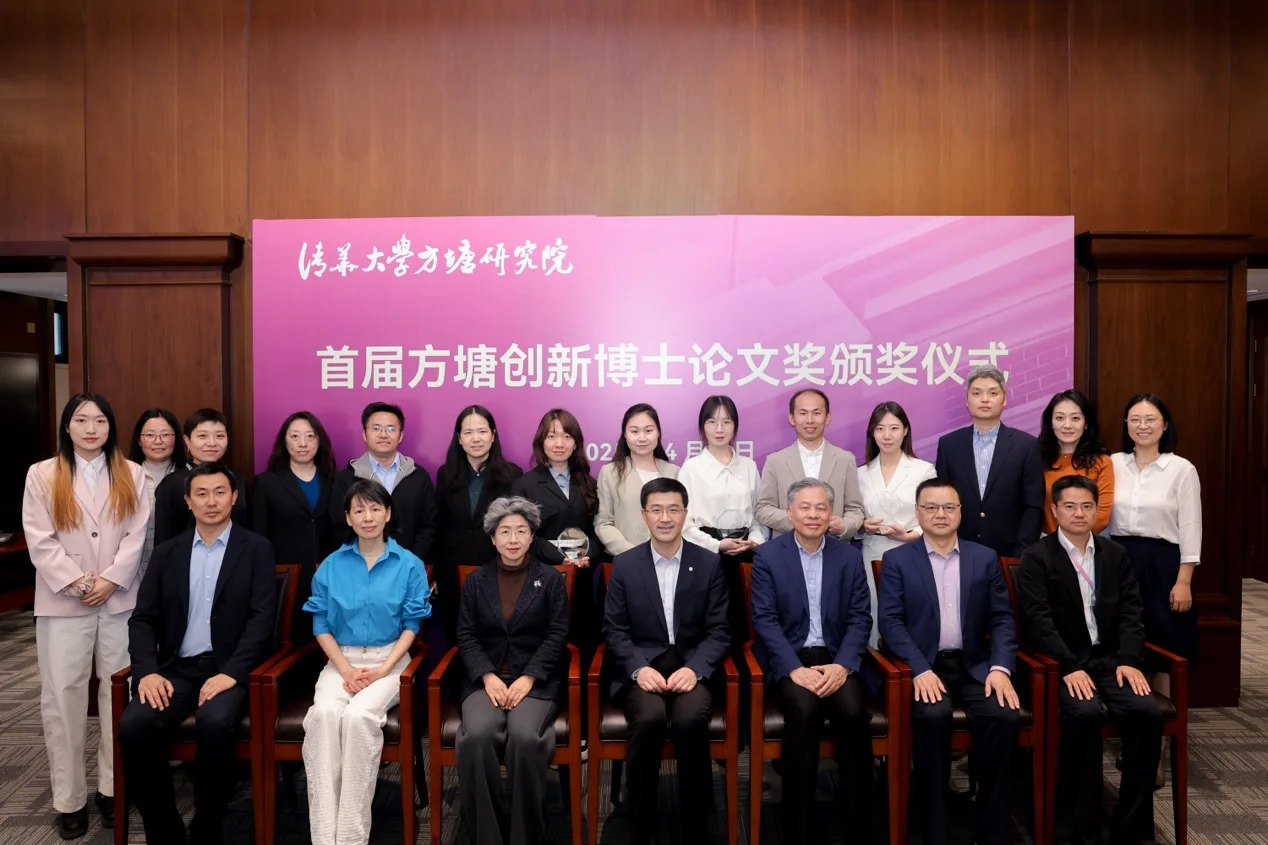
This address was delivered by Yang Jinfang at the inaugural Fangtang Doctoral Dissertation Award ceremony in April 2025. It sets out Fangtang’s founding aspirations, vision, and expectations for scholarship that can serve humanity in an era of profound change.
It is an honour to join you for the inaugural Fangtang Doctoral Dissertation Award ceremony. First, I would like to congratulate all the award recipients. I would also like to take this opportunity to share some thoughts on Fangtang’s vision and aspirations.
I believe everyone here has sensed that a new era is arriving with great force. We stand at a new watershed in human civilization and may well be witnessing the arrival of another axial age in history.
The rapid development of artificial intelligence has ushered humanity into another era of profound uncertainty. As AI permeates society, its growing capabilities have generated widespread anxiety: existing work may be displaced on a large scale; intelligent agents and robots may become carers, companions, and friends; and augmented humans and digital immortality may become realities. Questions of philosophy, religion, and ethics will again take center stage. We will ask what it means to be human, what life and death are, and what meaning, love, and friendship entail. Basic concepts will be overturned, foundational philosophical ideas reconfigured, and with them the premises of sociology, history, and psychology. A host of new questions will emerge across the humanities, awaiting answers from younger scholars.
These questions are vast, yet they concern every person’s fate and invite broad human resonance. Their essential nature also gives them a capacity to speak across time and place.
At such a moment, as Chinese people we are not only major participants in the development of science and technology; we should also assume the responsibilities and mission entrusted to us by the age. We should respond to the questions of our time while posing more forward-looking ones, and contribute Chinese wisdom to human civilization. This is an important expression of China’s soft power in the AI age.
At the same time, Chinese contributions to original innovations of global consequence - whether fundamental scientific discoveries, major tools and methods, or changes in applied paradigms - remain out of proportion with China’s strength in science, technology, and the economy. The study of the meta-theory of original innovation is therefore important. The Fangtang Institute has discussed a mission: to explore and disseminate the intellectual premises, cultural underpinnings, and educational principles that nurture world-class innovative minds and give rise to landmark original discoveries. This is an interdisciplinary question spanning the humanities and sciences. In pursuing it, we hope to cultivate masterful scholars working across these fields, foster classic works in philosophy, psychology, education, sociology, and related disciplines, and help change a situation in which the canon read and studied around the world contains so few works by Chinese authors.
In the face of the alienation of scholarship by instrumental rationality, and AI’s formidable capacity to integrate knowledge, younger scholars must learn to identify good questions and illuminating perspectives, and to use AI to create theories that AI itself cannot create. To encourage the exploration of original ideas, the Fangtang Institute established the Fangtang Doctoral Dissertation Award. It aims to inspire young scholars to pursue the frontiers of learning and venture beyond the boundaries of knowledge, allowing a continuing flow of ideas to offer humanistic guidance for accelerating technological and social change.
The five award recipients today present five distinct forms of young thought in the humanities and social sciences. Each achievement carries forward Tsinghua’s tradition of renewing the humanities day by day. I therefore call on more young scholars to learn and exchange across disciplines, to confront fundamental, essential, and forward-looking questions, and to safeguard this clear spring of thought - preserving both Socrates’ spirit of inquiry and Zhuangzi’s practical wisdom. Through an enduring conversation with the sources of wisdom, may we nourish the roots of civilization.
- doctoral-dissertation-award